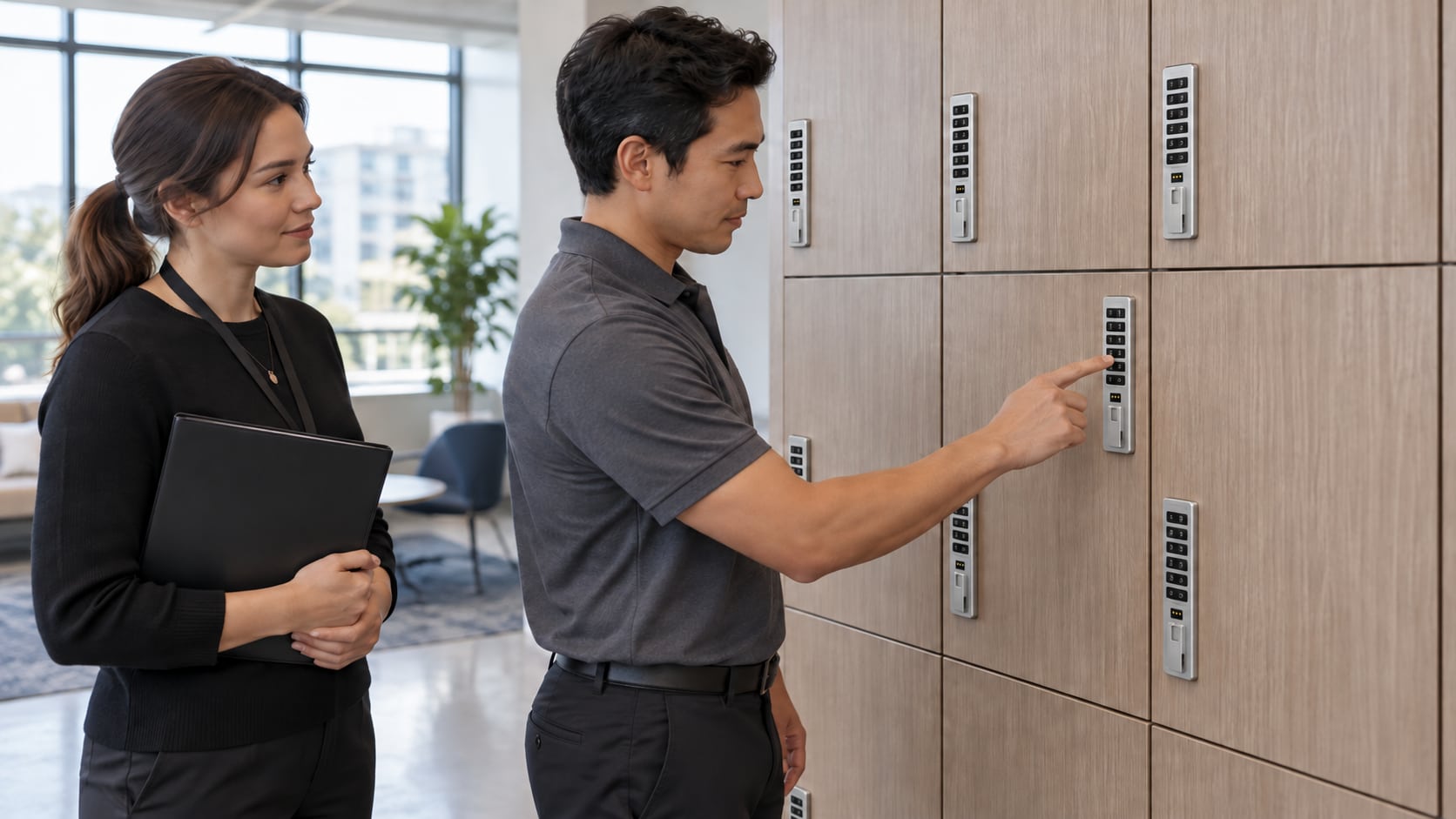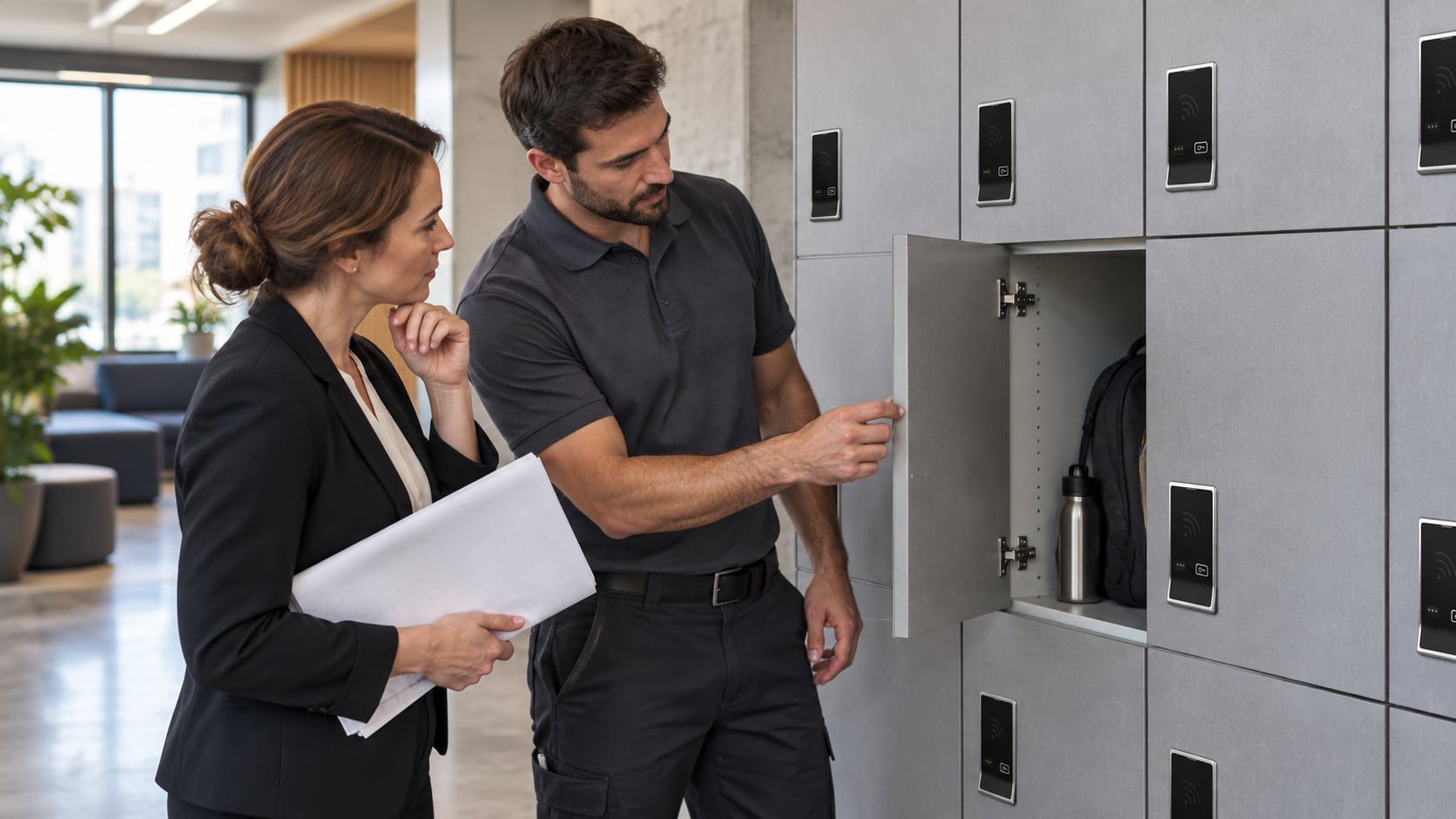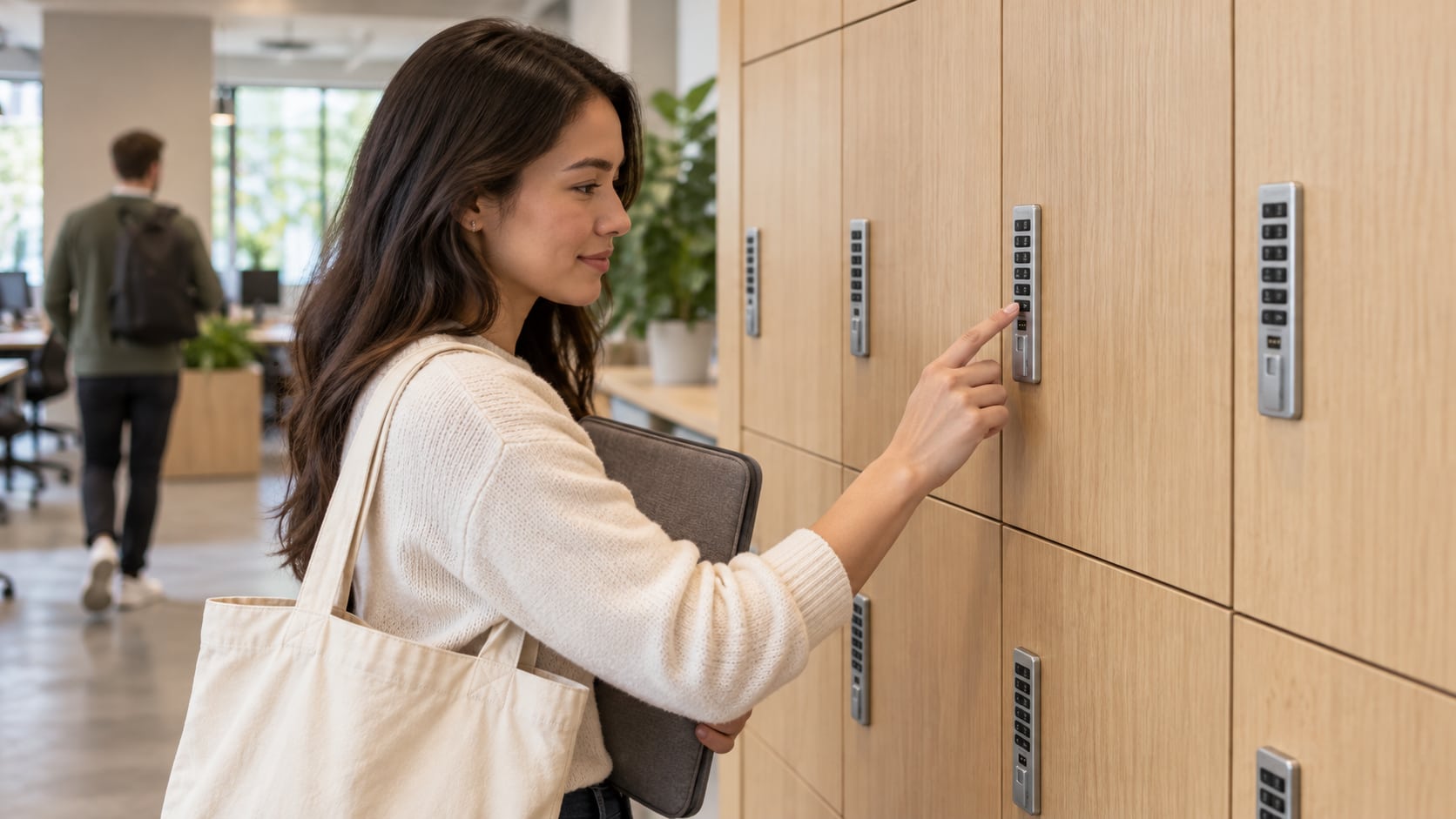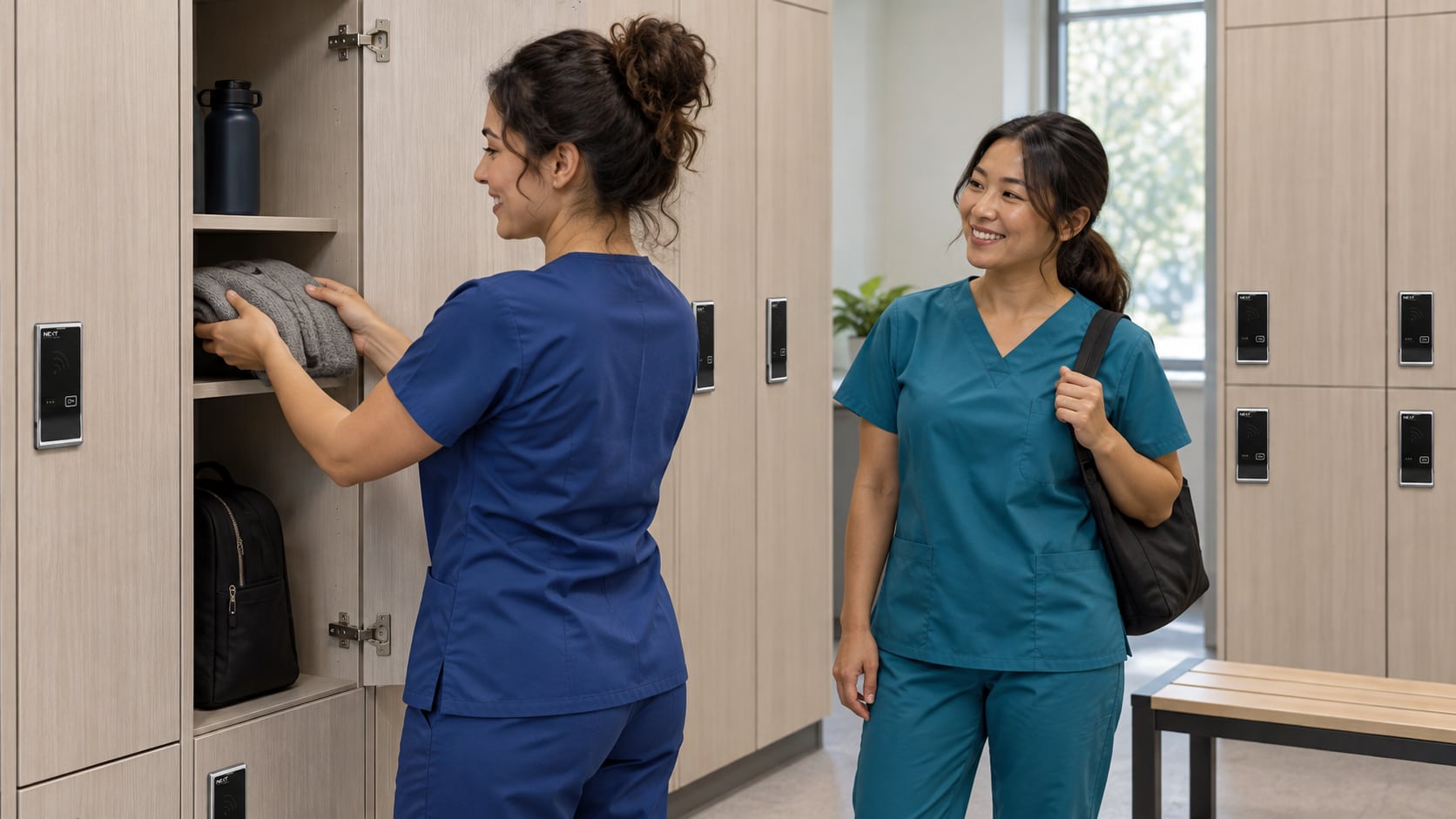
For hospital staff lockers, choose the storage policy before choosing the lock. Decide who keeps a dedicated locker, who uses temporary storage and how staff get assistance across all shifts. Then confirm that the exact Digilock configuration supports those workflows and fits the existing doors.
This guide concerns employee clothing, bags and other personal belongings. It does not specify locks for medications, controlled substances, patient records or other regulated storage. Those applications require their own requirements and specialist review.
Count overlapping users, not only employees
A staff list does not show how many people need a locker at the same time. Review the busiest handover periods, when the outgoing shift has not yet collected belongings and the incoming shift is arriving. Include agency personnel, trainees, float staff and employees temporarily reassigned between departments.
Observe actual locker use over representative shifts before committing all openings to one policy. Document where lockers remain occupied between shifts, where staff cannot find space and where storage is needed outside the main changing room. Avoid promising space savings before the occupancy pattern has been checked.
Separate dedicated and temporary storage
Digilock’s healthcare guidance identifies staff lockers as a storage application and describes shared and assigned use across its product range. That does not mean every existing lock supports every mode. Review the exact family, generation and rear mechanism.
A practical allocation plan may include dedicated lockers for staff who need continuing storage and a separate temporary-use area for rotating personnel. Clearly identify the two areas and explain when temporary lockers should be emptied. Do not rely on the appearance of a lock to communicate the policy.
For example, the documented Range family has different rear-unit configurations. The manufacturer’s Range product information distinguishes a deadlatch intended for assigned use from a deadbolt described for shared or assigned use. Confirm the actual configuration rather than assuming staff can change any lock into the preferred mode.
Review credentials with security and operations
Existing staff badges may be convenient, but a badge that opens a building entrance is not automatically compatible with a locker reader. Identify the card technology and test an authorized sample with the exact proposed lock. The RFID badge-compatibility guide outlines the information needed for that discussion.
Plan for temporary personnel who may have a different credential. Also confirm what happens when a badge is replaced or employment ends. Do not assume a building-access cancellation automatically removes access from an independent locker system.
Keep employee assignment records separate from public locker labels. Public signs should explain use and assistance, not expose credentials or a person’s work schedule.
Provide assistance on every staffed shift
Identify the authorized role that handles lost credentials and access problems overnight, on weekends and during handovers. The role needs the correct model-specific resources and a clear escalation route, not informal instructions passed from one employee to another.
- Identify who verifies a request for access assistance.
- Keep management credentials secured and accountable.
- Define where unresolved lock faults are reported.
- Mark unavailable lockers clearly without revealing private information.
- Arrange alternative personal storage when a locker is awaiting service.
Coordinate cleaning access without treating an occupied locker as freely available. Cleaning products and methods should be approved for the exact hardware. The facility’s hygiene policy and the hardware care instructions must both be addressed; do not infer chemical compatibility from a healthcare marketing page.
Confirm the installation before expanding it
Start with a representative opening and evaluate ordinary use across the shifts it serves. Include the credential, door operation, access assistance and cleaning workflow. Review any differences between departments before repeating the configuration throughout the facility.
For an existing Numeris Aspire installation, record the generation rather than applying current Aspire features automatically. Request a healthcare staff-locker quote with quantities, door photographs, allocation policy and badge information. Availability, fit and the proposed operating mode should be confirmed in the response.
Healthcare staff locker questions
Should every employee receive an assigned locker?
That depends on continuing storage needs and peak overlap. Compare actual use before allocating all lockers permanently or making every opening temporary-use.
Will existing hospital badges work?
Compatibility must be checked with the exact badge and reader configuration. Access to the building does not establish compatibility with the locker system.
Does this guidance apply to medication cabinets?
No. It addresses employee personal storage only. Regulated or clinical storage needs a separate specification and appropriate professional review.
Can the night shift use the same support process?
It should have a defined authorized assistance route. Confirm access to approved resources at those hours instead of relying on a daytime reception desk.