A lock suitable for one indoor changing room is not automatically suitable beside a shower, on an exposed pool deck or in an outdoor cabinet. For a pool or spa locker project, describe the real moisture and cleaning conditions, then obtain suitability confirmation for the exact lock and installation. Do not treat the Digilock brand name, a metal finish or a gym photograph as a waterproof rating.
Describe exposure, not just “pool lockers”
The phrase “wet area” can mean several different things. A dry changing room separated from showers has a different exposure pattern from lockers regularly splashed by guests or washed down by a cleaning team. Start a short location schedule rather than assigning the same requirement to every opening.
- Are the lockers indoors, outdoors or in a partially enclosed space?
- Can water reach the front, rear or edges of the installed lock?
- Is there condensation, persistent humidity or nearby chemical storage?
- How are the locker doors and floors cleaned?
- Are there notable temperature changes during operating hours or shutdowns?
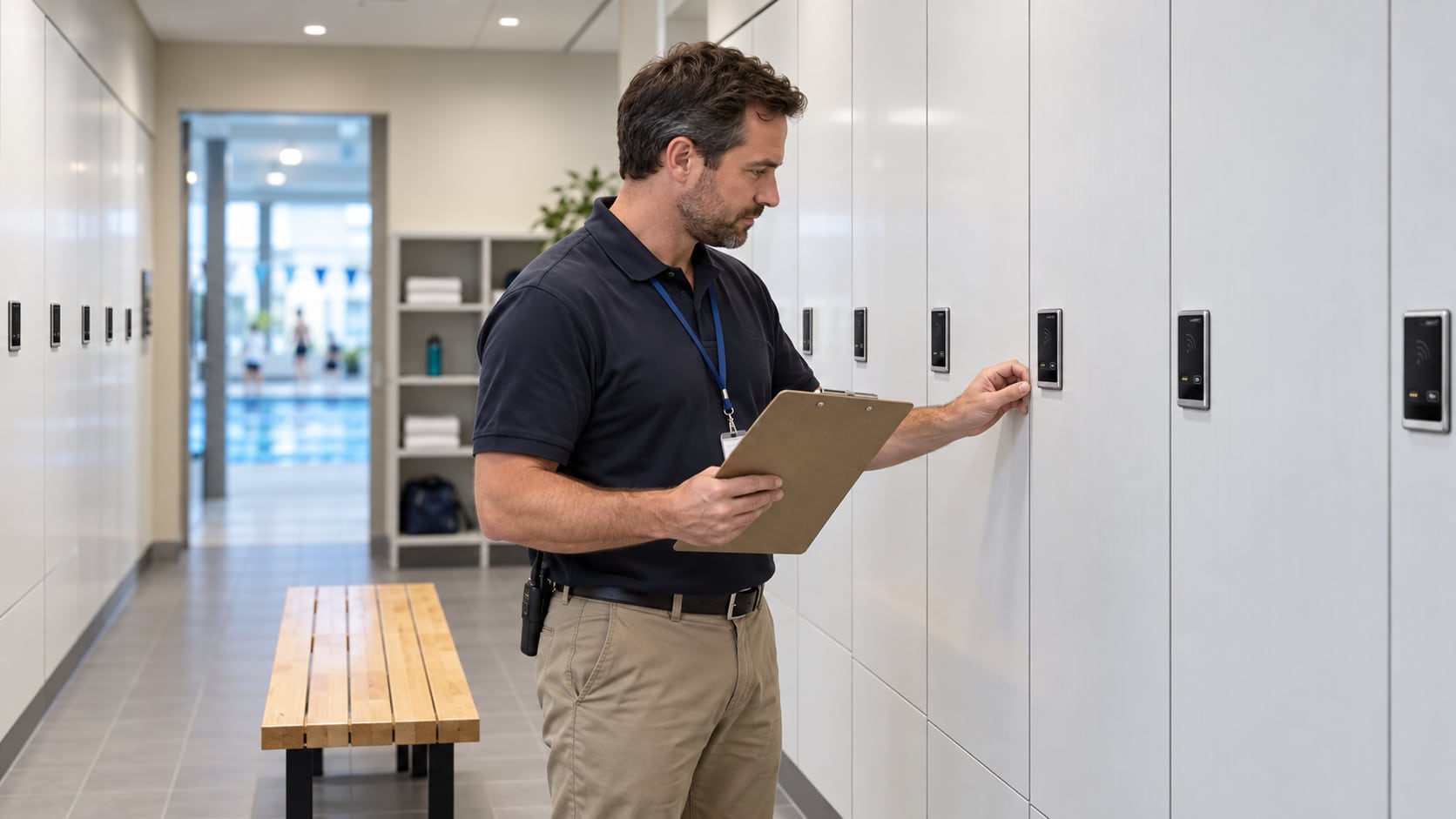
Include photographs showing the surrounding area, not only a close-up of the lock. Ask the project team to supply environmental measurements where the manufacturer needs them; a guess such as “normally quite humid” may not support a meaningful approval.
Check the exact generation and documented limits
Digilock publishes products for fitness and locker-room applications, but an application category is not a universal environmental specification. Review the documentation for the quoted model, including any required accessories or installation conditions.
Legacy and current families must also be kept separate. The site’s Range identification page and Cue identification page are useful starting points for existing NextLock installations. A current product with a similar appearance does not establish the limits of the lock already installed.
For example, Great Openings’ care sheet for its Digilock-equipped furniture describes the covered electronic lock as intended for indoor use. That limitation should not be replaced with a general claim that all electronic locker locks can be used outside.
Evaluate the locker and rear unit together
The visible face is only part of the installation. Ask the installer to consider the door material, existing cutouts, rear clearance, strike and the location of the battery compartment or other service points. The locker construction should not channel cleaning water toward a vulnerable opening.
Do not add sealant, covers or drainage modifications without approval. An improvised change can affect operation or servicing, and it does not turn an undocumented installation into a rated assembly. Obtain the relevant installation drawing before approving any modification to the door.
Make the cleaning plan part of purchasing
Ask operations staff to provide the cleaning products and methods they actually use. Supply that information with the quote request so an incompatible method is identified before hardware is selected. Do not assume the lock can tolerate every product used on benches, tiles or locker panels.
Where existing units are showing staining, intermittent operation or visible damage, document the location and circumstances. Keep affected lockers out of normal allocation until authorized staff have assessed them. A replacement order should address the exposure question as well as the model number.
After suitability is confirmed, test the proposed configuration in a controlled, representative installation using the approved routine. Do not conduct immersion, hose or chemical tests on your own to “prove” a rating.
Request a pool or spa locker-lock quote with the family, quantities, door details, location photographs and cleaning specification. Treat availability and environmental suitability as confirmation items, not assumptions. This guide supports purchasing discussions; the manufacturer and project team must approve the exact application.
Pool and spa locker questions
Are all Digilock locks waterproof?
No universal waterproof claim is appropriate. Use the environmental specification for the exact model and configuration, and obtain confirmation when the intended exposure is not clearly covered.
Does an indoor installation eliminate moisture concerns?
No. Indoor lockers can still experience splashing, condensation or direct cleaning exposure. Record those conditions separately so the supplier can evaluate the actual installation.
Can we reuse locks from a dry staff room at the pool?
Only after confirming their identity, condition, fit and environmental suitability. Successful service in one location does not establish approval for a different environment.
Should operating rules be planned separately?
Yes. Environmental suitability is one decision; shared-use instructions, closing-time procedures and staff assistance are others. Confirm all of them before opening the locker area to guests.