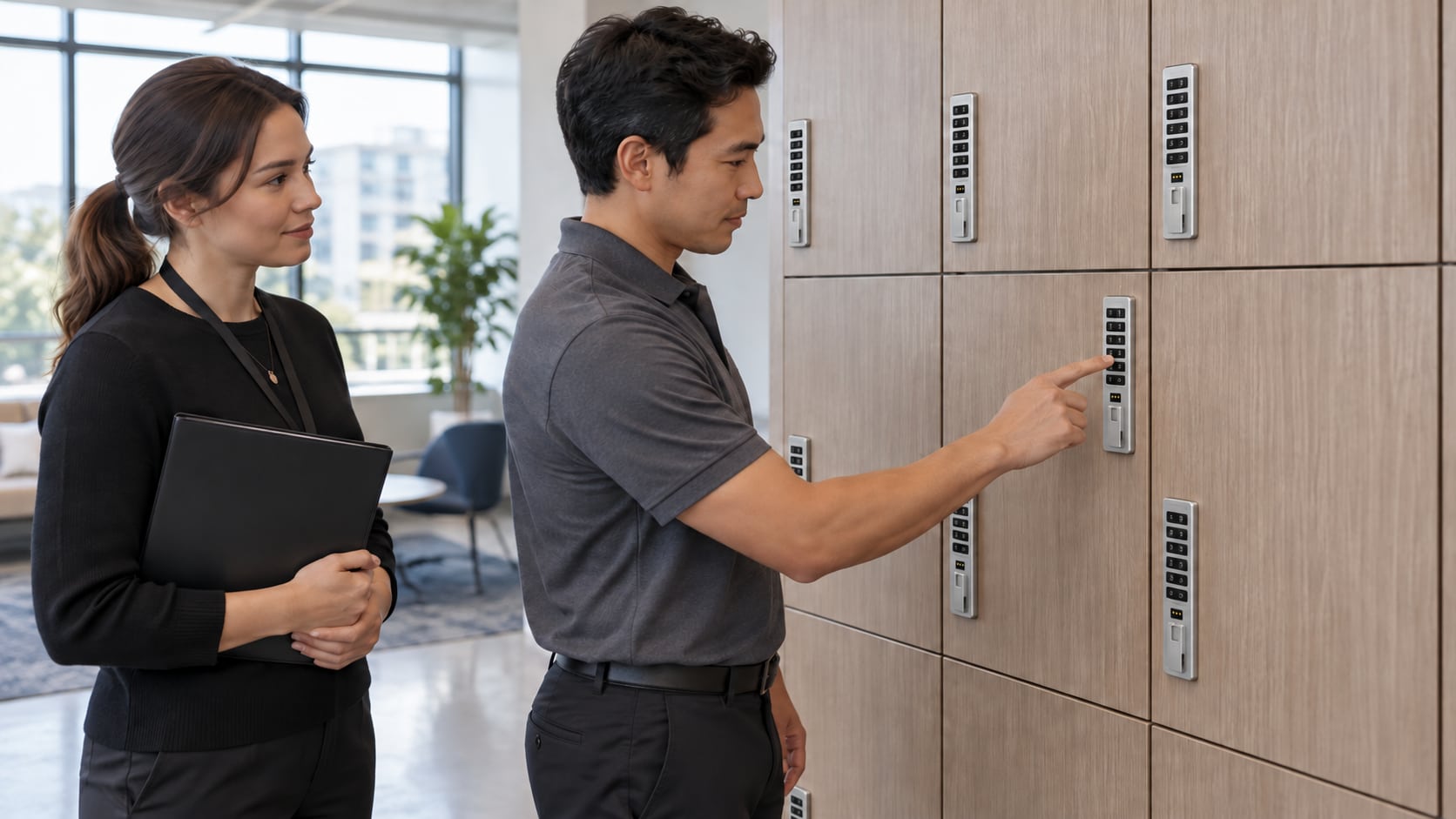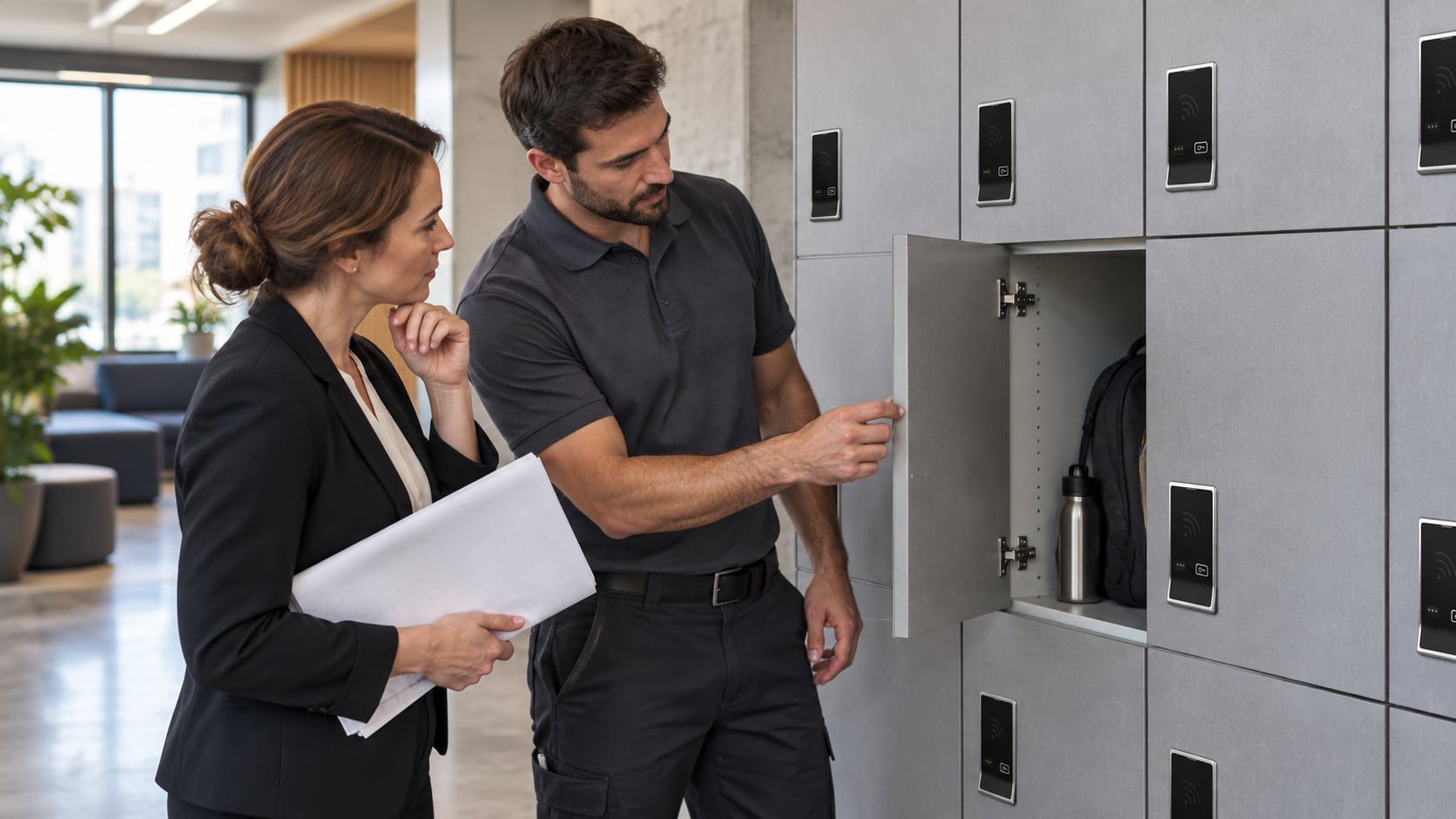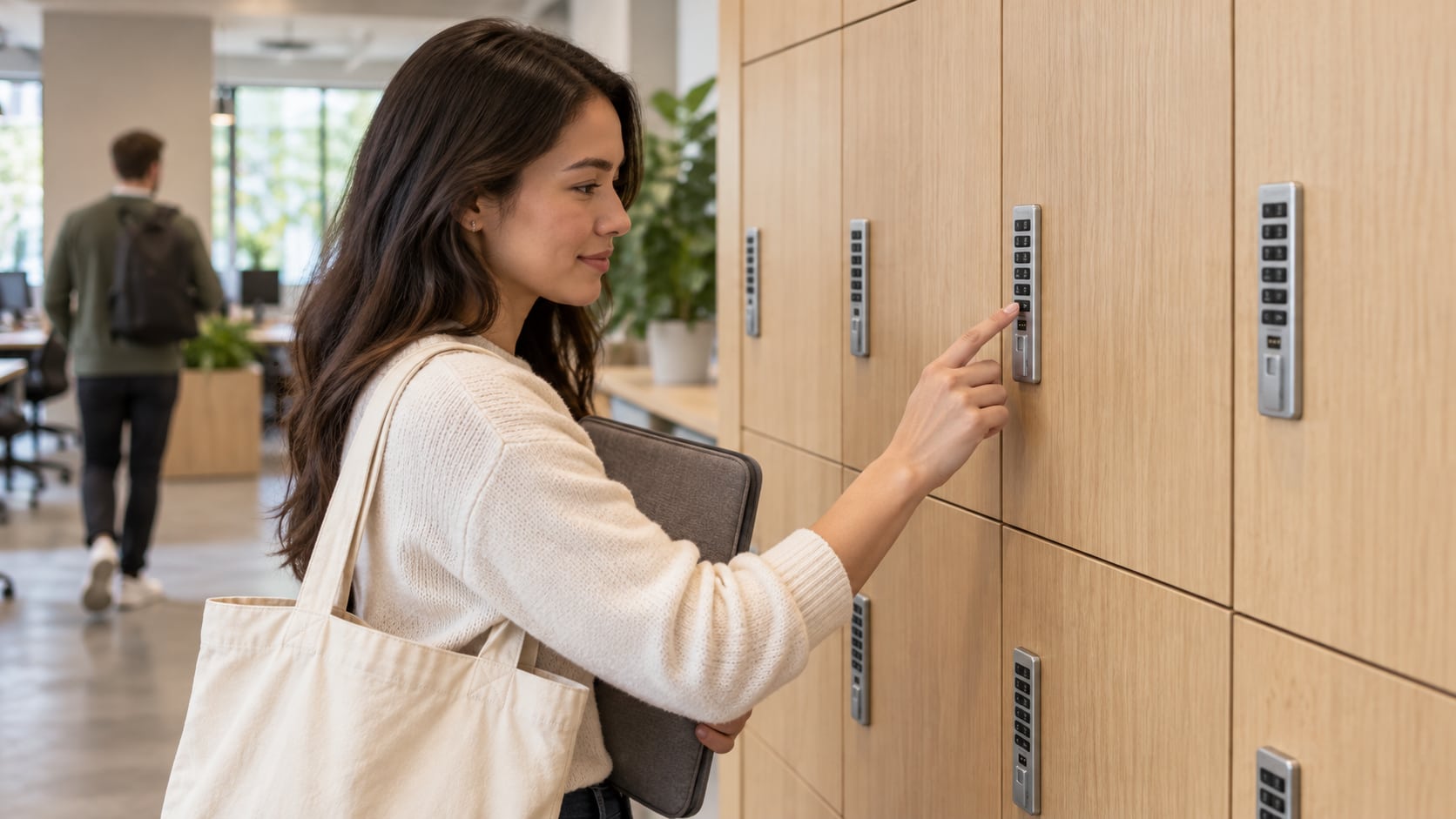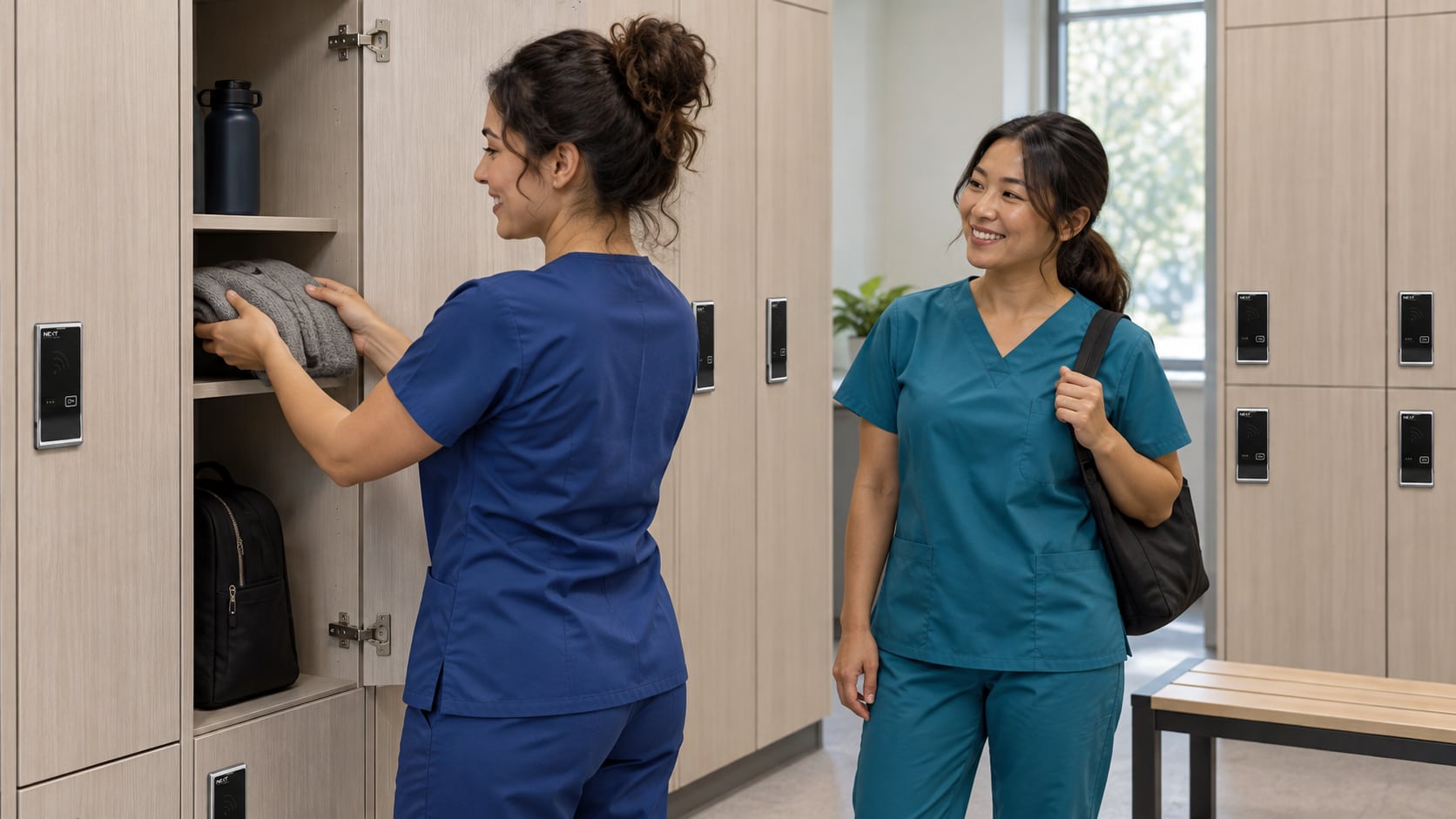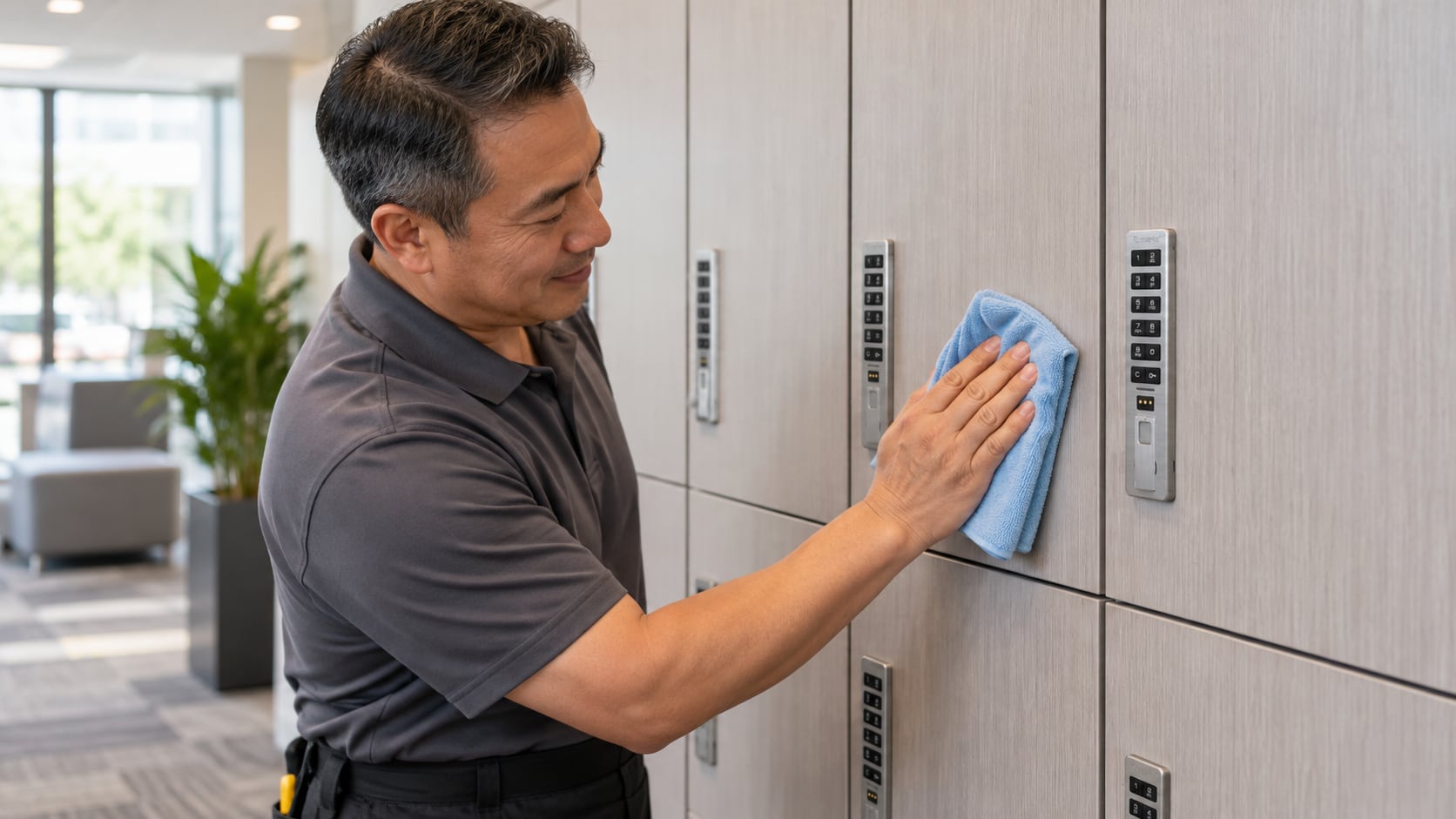
Clean a Digilock locker lock according to the instructions for its exact model, finish and furniture installation. Do not assume the cleaner approved for the locker door is also approved for the keypad, RFID reader or locking unit. A useful facilities plan identifies the hardware, confirms the cleaning method and tells staff when to stop and report a problem.
Start with the right care instructions
Digilock’s support library separates current products from legacy Numeris and NextLock families. Check that the guide matches your installed lock before adopting a cleaning routine. Our Digilock generation-identification guide explains what to record if that identity is unclear.
There is a useful manufacturer example: Great Openings’ instructions for its furniture equipped with Digilock electronic locks specify a non-acid-based cleaner applied to a cotton cloth and prohibit spraying cleaner directly onto the lock surface. That is guidance for the covered installation, not blanket approval of every cleaner on every Digilock generation.
If a supplier’s care sheet and your facility’s cleaning specification appear to conflict, resolve the conflict before treating the hardware. Send both documents and the exact cleaning-product label to the appropriate manufacturer or support team.
Write a short, usable cleaning specification
A generic instruction such as “wipe all touchpoints” leaves too much to interpretation. Create one approved record for each materially different lock and finish:
- Lock family, generation and location, with a reference photograph.
- Furniture manufacturer’s care instructions and matching lock documentation.
- Approved cleaning product, preparation and application method.
- Any required exclusions, drying instructions or restrictions.
- The staff role responsible for questions and visible damage.
Keep the record accessible to employees and contract cleaners. If the facility changes cleaning products, review compatibility before the change reaches the locker room. A familiar brand name is not enough when products within that brand have different formulations.
Separate cleaning from inspection and servicing
Cleaning staff can report a loose pull, a damaged faceplate, residue around buttons or a door that no longer closes normally. They should not be expected to dismantle a lock, adjust its mechanism or perform administrator procedures as part of routine cleaning.
Assign those reports to facilities staff using the locker number rather than the occupant’s name. Record what was observed and when, then arrange an authorized inspection. Do not describe a cleaning problem as a battery fault simply because the lock is electronic.
Battery maintenance is a separate task with generation-specific requirements. Use the Digilock battery-maintenance planning guide to organize that work without adding battery removal to an ordinary custodial checklist.
Review one locker before changing the routine
After obtaining the applicable instructions, have the responsible facilities person observe the proposed routine on an empty, authorized test locker. Confirm that staff understand which surfaces are included, that no unapproved product is substituted and that normal operation is checked afterward.
This is a process check, not a chemical-compatibility certification. A short trial cannot establish long-term finish resistance or make a product suitable when its documentation says otherwise. Retain the approved instructions and revisit them when hardware, cleaning products or service contractors change.
For an installation containing Range locker locks or other legacy families, keep the family details with the care record. Contact Digital Locks Online with photographs and the model information if you need help identifying the hardware for a product or replacement inquiry. For an exact cleaning-product compatibility decision, obtain manufacturer confirmation.
Cleaning questions
Can we use our usual disinfectant on a Digilock lock?
Not without checking the exact product and hardware instructions. A facility’s disinfecting requirement does not establish that a particular chemical is compatible with the lock’s finish or electronics.
Does an RFID reader need the same care as a keypad?
Do not assume so. Record the interface and generation, then use the applicable instructions. Both the lock and the surrounding furniture may have separate care requirements.
Should cleaners spray the lock and wipe it afterward?
The cited Great Openings instructions prohibit direct spraying for their covered Digilock-equipped furniture. Follow the approved application method for your exact installation rather than improvising a spray-and-wipe routine.
What if a lock stops responding after cleaning?
Report the event to authorized facilities staff, including the product used, application method and timing. Follow the matching support guidance; do not attempt repeated resets or continue applying liquid to the lock.